
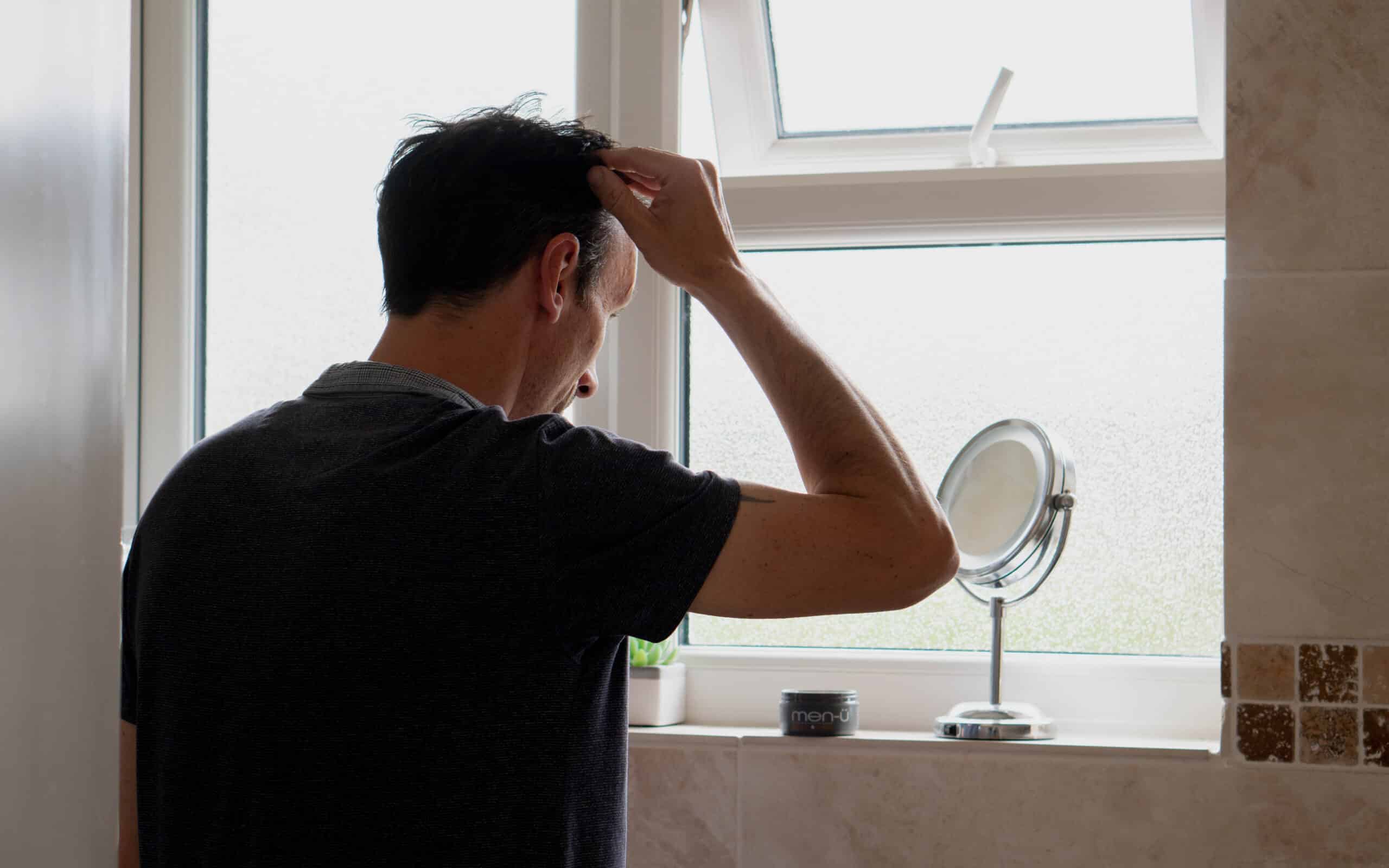
You’re working long hours, barely sleeping and running on caffeine. Your career’s going somewhere, but your hairline might be going with it. If you’ve started noticing more hair in the shower drain or things looking a bit thin around the temples, your job could be playing a bigger part than your genetics.
Hair loss in your twenties and thirties is way more common than most blokes realise. Around 20% of men will start to notice balding by age 20, and by 30 that rises to roughly 30%. By 35, about two-thirds of men will have some degree of noticeable hair loss. What doesn’t get talked about enough is how ongoing workplace stress can speed the whole thing up. So let’s get into the biology, the career habits that make it worse, and what you can actually do if you’re spotting the early signs.
What Happens to Your Hair When Stress Won’t Let Up
Your hair grows in cycles. Each follicle goes through a growth phase (anagen), a brief transition, and then a resting phase (telogen) before the hair falls out and the whole thing starts over. Normally, about 85% of your hair is in the growth phase at any given time.
Chronic stress messes with this cycle badly. When your body’s under constant pressure, it pumps out more cortisol, your main stress hormone. A study published in Nature by Harvard researchers found that high stress hormones keep hair follicle stem cells stuck in the resting phase for much longer than they should be. Cortisol acts on cells beneath the follicle called the dermal papilla, and it suppresses a molecule called GAS6 that normally kicks hair growth into gear. Without that signal, follicles go dormant and hairs fall out with nothing coming through to replace them.
This condition is called telogen effluvium, and it usually shows up two to three months after a rough period of stress. That delay is exactly why it catches people off guard. You won’t connect the shedding to that project back in January that nearly broke you.
How Modern Careers Are Fuelling the Problem
The Health and Safety Executive reported that an estimated 964,000 workers in Great Britain suffered from work-related stress, depression or anxiety in 2024/25. And that’s only the ones who reported it.
For men in their twenties and thirties, the pressures tend to be very specific. Long hours, constant screen time, rubbish sleep, back-to-back meetings and the expectation to always be available will keep cortisol levels chronically raised. If you’re already genetically prone to male pattern baldness (androgenetic alopecia), that cortisol spike can bring on thinning years earlier than it would’ve happened otherwise. Stress won’t cause male pattern baldness by itself, but it can drag the timeline forward by quite a bit.
There’s also a nasty feedback loop at play here. Losing your hair in your twenties is stressful on its own. Research shows that 48% of young men say their hairline affects their confidence. The anxiety of watching your hair thin pushes cortisol up even more, which sends more follicles into rest, which means more shedding. It becomes a cycle that’s hard to break out of.
How to Slow the Damage
You don’t need to quit your job to protect your hairline, but you will need to take stress management seriously. These aren’t woolly wellness tips. They’re things that will directly bring down your cortisol levels and, by extension, help your hair cycle get back on track.
- Sleep is the biggest one. Poor sleep pushes cortisol levels up, especially in the evening when they should be dropping. If you’re regularly getting less than six hours a night, that alone could be enough to trigger telogen effluvium. Try to get seven to eight hours, and put the phone down at least 30 minutes before bed.
- Exercise brings cortisol down and gets more blood flowing to the scalp. You don’t need to train like a professional athlete. Three to four sessions a week of moderate resistance training or cardio will make a real difference.
- Set boundaries with work. If you’re replying to emails at 11pm, your body never gets the message that the stress is over. Cortisol stays high, and your follicles stay dormant.
For men who are already noticing thinning, over-the-counter treatments like minoxidil can help hold onto what you’ve got. Another one is finasteride, which blocks DHT, the hormone that drives male pattern baldness, and can slow or even reverse thinning in many men. In the UK, finasteride for hair loss isn’t available on the NHS and needs to be obtained through a private prescription (from a private GP, online pharmacy, or hair loss clinic).
The MHRA strengthened its safety warnings for finasteride in 2026, highlighting risks of depression, suicidal thoughts, and sexual side effects that can persist even after stopping the medication. Make sure you discuss these risks with the prescribing doctor before starting treatment.
When to See a Specialist
If you’ve been shedding noticeably for more than three months and lifestyle changes aren’t helping, it’s time to talk to a professional. A GP can run blood tests to rule out thyroid problems or iron deficiency, both of which can look a lot like stress-related hair loss.
For men whose hairline has already moved back significantly, the conversation will eventually turn to surgical options. A dermatologist can work out whether your hair loss is temporary (telogen effluvium) or permanent (androgenetic alopecia), and that distinction will shape what happens next.
FUE (follicular unit extraction) is currently the most common transplant method in the UK, with individual follicles taken from the back of the scalp and moved to thinning areas. The procedure has become more refined over the past decade, and there are now options for improving your hairline that can produce results close to a natural growth pattern when performed by an experienced surgeon.
The key question to ask any specialist is whether your hair loss has stabilised. Most surgeons won’t operate until it has, because transplanting into an area that’s still actively thinning can leave you with uneven results later on. Medication to stabilise the loss usually comes first, and surgery follows once things have settled down.
Treat It Like a Health Issue, Not a Vanity One
Hair loss in young men still gets treated as a cosmetic thing by most people, and that stops a lot of blokes from doing anything about it until the damage is already well advanced. But chronic stress-related hair loss is a real physiological response to a body that’s under too much pressure. Your hair is basically a barometer for how well you’re coping with the demands of your career.
If your hairline’s changing and your job has been relentless, the two are probably connected. Take the stress seriously, get advice early, and you’ll have a much better shot at keeping what you’ve got.