
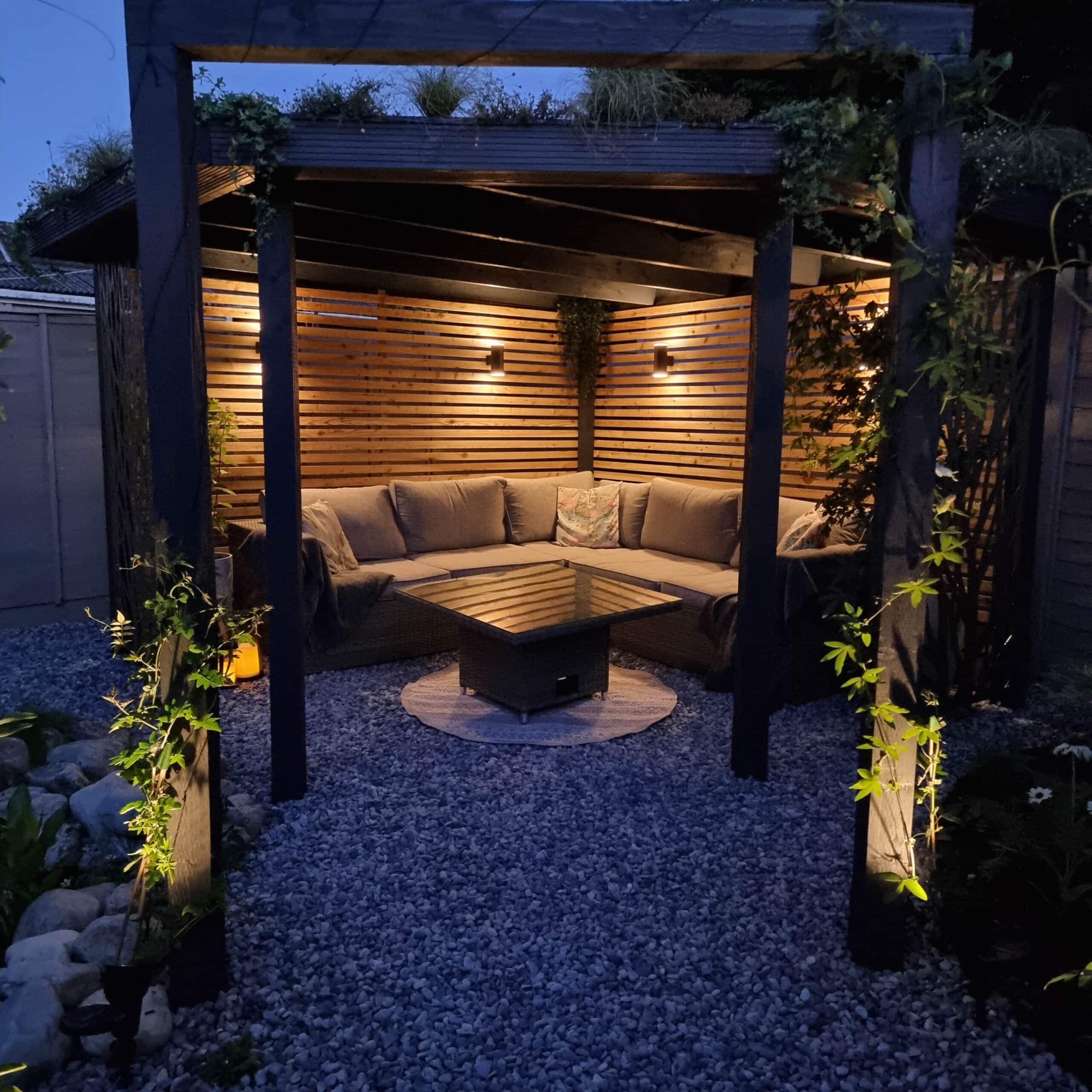
A patio table can be out for lunch, folded away for a game and brought back for supper. Add toys, a washing line and a cushion box, and the lighting has several arrangements to work around.
* Collaborative post
That is worth thinking about before choosing where the lights will go. A family garden needs to accommodate setting up, playing, eating and putting things away. The most useful lighting plan follows those everyday routines, including the bits that happen before everyone finally sits down.
Sketch the garden in two arrangements
Draw a simple plan showing the house door, storage, planting and any permanent furniture. Then add the table and chairs in their usual dining position. Include chairs pulled back from the table and the route used to carry food outside.
On a second sketch, show the garden when the table is moved or folded away. Mark the space used for games, the toys that come out and any equipment that gets stored beside the house. A light placed neatly beside a dining chair may end up in the middle of another activity.
Compare the two drawings to see which positions remain useful. The back door stays in the same place, as does the storage box. Movable seating may need a more flexible arrangement.
When browsing Dazuma’s Outdoor Lighting collection, keep both sketches beside your shortlist. Compare fixed and movable options against the way the garden is actually used, rather than choosing every fitting for one evening photograph.
Keep the everyday jobs in view
Start at the house and follow an ordinary trip outside. Open the door, bring out cushions and put something on the table. Notice where light is useful along the way, especially around storage handles, changes in level and the place where people leave their shoes.
An existing wall light may already cover some of these jobs. Try it with the furniture in both arrangements before deciding what to add. Check where its light falls; a decorative pattern on the wall does not tell you how clearly the nearby storage or table can be seen.
A fixed wall light needs a useful role alongside the doors, storage and activities that remain in place.
Plan the controls around those same trips. Decide which light you want to switch on before opening the back door, and how it will be turned off when everyone comes in. If separate areas need independent operation, explain that to the installer while discussing the layout.
For new fixed fittings, confirm the selected model’s outdoor suitability, electrical requirements and installation method with the supplier and local installer. Include any changes to wiring, controls and wall finishes in the plan before ordering.
Give movable lights a proper place
A portable light can suit a seating area that changes position, provided it has somewhere appropriate to stand. Check the full base dimensions and the manufacturer’s placement instructions. A small-looking lantern in a photograph can take up more of a side table than expected.
Put the usual glasses, plates and serving dishes on the table before deciding where the light belongs. On a side table, leave room for the things someone will actually put down. Keep the light outside the space needed for games and the routes between the house, seating and storage.
Use the full base dimensions when deciding where a lantern can stand in each garden arrangement.
Check the power supply and the routine it requires. For a rechargeable model, establish where charging will happen and what the instructions permit. For a solar model, check where the panel needs to be positioned for charging and whether that location suits the way you intend to move the light.
Also decide where the fitting will be kept afterwards. Read the care and storage instructions for the exact version. Having a handle makes a light easier to carry, but you still need a convenient place to put it when the table is folded away.
Remember the last trip outside
The garden is often tidied in stages. Plates go inside first, then cushions, toys and perhaps the washing that was forgotten earlier. Include those trips when testing the lighting arrangement.
Open the storage box fully and check the space in front of it. Look at the route to the shed with the furniture occupied. A chair pushed back after dinner can change that route, so test the everyday arrangement rather than an empty patio.
For movable lights, work out the order in which things will be put away. It should be possible to keep useful light available while clearing the area, then operate the remaining lights conveniently from the house.
Try an ordinary evening before adding more
Use the existing lights to identify specific gaps. Sit at the table, move to the usual evening seat and look back towards the house. Note any light source that is uncomfortably visible, along with places where an everyday task remains difficult.
Photograph both furniture arrangements and note what you want each light to do. That gives the supplier or installer a clear brief when discussing positions and coverage.
Keep the two garden sketches with the selected product details. Mark where fixed lights belong, where movable ones will stand and where they will be stored. If the table changes position again, you will have a practical plan to revisit before buying another light.