
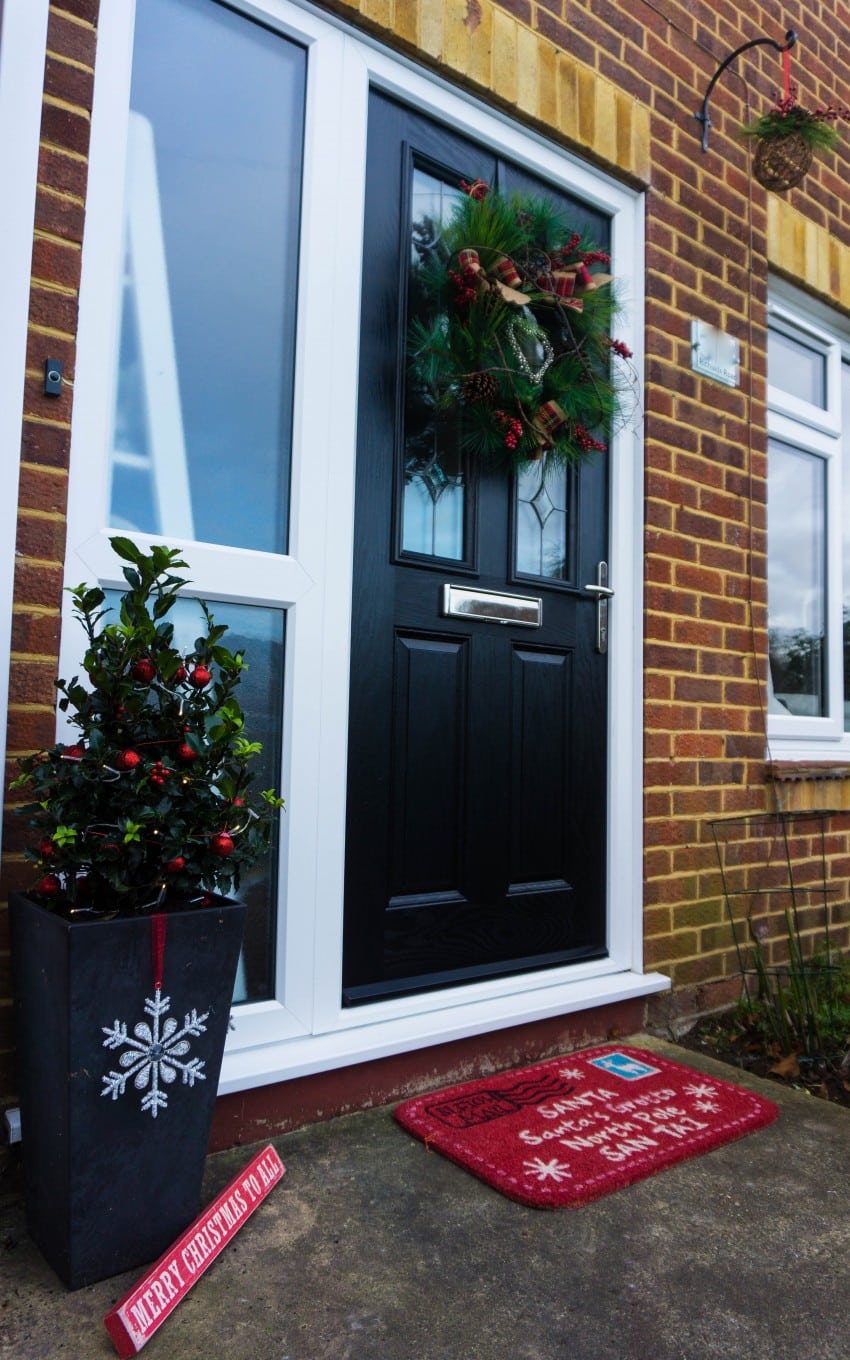
A security door only works if the homeowner isn’t embarrassed by it. Most “best security doors” round-ups are either steel-door spec sheets for commercial buyers, or composite door marketing that barely mentions the locking standard behind the paint colour. We looked at UK manufacturers against a narrower brief: does the door meet a recognised UK security standard, and would you actually want it on the front of your house.
That ruled out several steel brands built mainly for industrial use, and a few composite ranges with nice photography but no verified certification behind them. What’s left spans a steel specialist, four composite manufacturers, a bespoke handcrafted option and a heritage-profile specialist, judged on documented certifications and manufacturing transparency rather than price alone. Every entry has a genuine downside. A security round-up where nothing has a weak point isn’t one worth trusting.
At a Glance
|
Company |
Best for |
Credential |
Verdict |
|
Lathams Steel Doors |
Steel security with kerb appeal |
PAS 24:2022, attack tested by Eddie “The Beast” Hall |
A steel specialist whose door doesn’t look industrial. |
|
Solidor |
Colour and style choice |
32+ finishes, PAS24:2016, Secured by Design |
The widest personalisation range here. |
|
Rockdoor |
Engineered strength |
Aluminium-reinforced frame, £2,000 anti-snap guarantee |
The most specific, backed security claim here. |
|
Endurance Doors |
Solid timber-core durability |
48mm Kerto core, 1,900+ installers |
The thickest, heaviest core on this list. |
|
Banham |
Bespoke period-property security |
Founded 1926, handcrafted, 1.5mm steel core |
Made to measure, not picked off a shelf. |
|
Residence Collection |
Conservation areas, listed buildings |
R9 flush sash, PAS24, Document Q |
The profile planning officers wave through. |
|
Door-Stop International |
Fast, affordable composite doors |
10-day nationwide delivery |
Quickest route to a certified door fitted. |
Illustrative image: a secure front door doesn’t have to look industrial.
1. Lathams Steel Doors
New for 2026: PAS 24:2022 certified security front doors with a steel leaf in a steel-reinforced uPVC frame, attack tested by World’s Strongest Man Eddie “The Beast” Hall, from £1,199.99 inc. VAT.
Verdict: A steel specialist that’s built a door which actually looks like it belongs on a house, not a warehouse.
Best for: Homeowners who want visible, certified security without an industrial look out front.
Background: Lathams has made steel doors from Oldbury, West Midlands, since 2011, and holds ISO 9001, 14001 and 45001 certification alongside Secured by Design accreditation. Its new High Security Front Doors range pairs a steel leaf with a steel-reinforced uPVC frame built for residential use, hitting A-rated efficiency and a U-value under 1.0 W/m²K, in modern flush, six-panel and cottage styles.
What stands out: The certification and the marketing line up: it had to pass PAS 24:2022 to earn Secured By Design status.
Downside: It’s a brand-new 2026 range without the multi-year fitted track record some composite brands below can point to.
Illustrative image: a modern flush-style security front door.
2. Solidor
Solid 48mm timber-core composite doors made in Staffordshire since 2004, with an Ultion 3-star cylinder standard and 32+ colours.
Verdict: The brand installers reach for first when a homeowner wants a door that doesn’t match the rest of the street.
Best for: Homeowners who rank colour and style variety above everything else.
Background: Solidor has built composite doors in Staffordshire for over 20 years around a solid timber core rather than foam. The range carries PAS24:2016 with Secured by Design available, sold through a nationwide installer network.
What stands out: Different colours can be specified inside and outside the same door, a genuinely wider range than anything else here.
Downside: No direct sales, so pricing and lead times depend on which local installer you use.
3. Rockdoor
Composite doors engineered in Lancashire since 1996, with a 360° aluminium-reinforced frame and a £2,000 guarantee against lock snapping.
Verdict: The most specific, financially backed security claim of any door on this list.
Best for: Buyers who weigh engineering and test data over kerb appeal alone.
Background: Rockdoor calls itself the original UK composite door, made to measure rather than cut to fit, with integrated S-Glaze glazing so panels can’t be levered out from outside. It holds PAS 24, Sold Secure and Secured by Design accreditation.
What stands out: £2,000 of Rockdoor’s own money sits behind its anti-snap claim, rather than a vague promise.
Downside: The design language leans traditional. Buyers after an ultra-modern flush look have more choice with Lathams or Endurance.
Illustrative image: a multi-point lock and anti-snap cylinder.
4. Endurance Doors
48mm Kerto timber-core composite doors made in Brigg, North Lincolnshire, sold through 1,900+ UK installers, with a proprietary moisture barrier system.
Verdict: If you want the thickest, heaviest door core on this list, this is it.
Best for: Older or exposed properties where doors tend to swell, stick or warp.
Background: Endurance builds each slab from 17 layers of cross-laminated Kerto timber, about 10% thicker than most rivals. A moisture barrier at the foot of the door targets the specific point where solid-core doors tend to swell, across Classic, Country and Urban collections in 19 colours.
What stands out: It targets one named failure point rather than a general durability claim.
Downside: Three fixed collections rather than an open design tool, so bespoke buyers have more flexibility with Banham or Lathams.
5. Banham
Bespoke, handcrafted security doors from a family-owned London security company founded in 1926, reinforced with 1.5mm steel panels and Banham’s own patented locks.
Verdict: The only entry here making doors by hand to match a specific period property.
Best for: Owners of period London and Home Counties properties needing an exact aesthetic match.
Background: Family-run since William F. Banham invented the automatic door bolt in 1926, now led by his grandson as the third generation. Doors are handcrafted from timber, reinforced with 1.5mm steel panels, fitted with Banham’s own patented locks, and colour matched to any Farrow & Ball, Little Greene or RAL reference.
What stands out: Banham will hand-spray a door to match a specific heritage paint reference or an existing feature on the property.
Downside: Installation is concentrated in London and the South East.
6. Residence Collection
R9 flush-sash composite doors engineered to replicate 19th-century timber joinery, certified to PAS24 and Document Q, commonly specified in conservation areas.
Verdict: The default choice when planning rules, not personal taste, dictate the new door has to look like the old one.
Best for: Homeowners in conservation areas or listed buildings needing a planning-compliant security door.
Background: The R9 system uses a nine-chamber profile with a flush exterior close enough to historic timber joinery that it’s regularly pre-approved for listed buildings, using patented decorative trim to hide the gasket line, in around 21 designs and 11 colours.
What stands out: One of the few uPVC systems conservation officers routinely approve without a fight.
Downside: Built specifically for period-style properties; a stark modern flush finish is easier to find with Rockdoor or Lathams.
Illustrative image: a period-style front door suited to conservation areas.
7. Door-Stop International
The UK’s top-selling ready-to-fit composite door by volume, made in Huthwaite, Nottinghamshire since 2008, with nationwide delivery inside 10 working days.
Verdict: Not a design statement, but the quickest route to a certified door fitted with minimum fuss.
Best for: Homeowners who want a straightforward composite door without a lengthy specification process.
Background: Door-Stop launched in 2008 to make ordering fast and simple; over 95% of orders still go through its own five-step online configurator. Now part of Owens Corning, it offers Dual Certificated Fire and Security Doorsets and was an early adopter of reglazeable glass cassettes.
What stands out: A publicly guaranteed “late means free” delivery promise, rather than just a target.
Downside: Design flexibility is limited to what fits the fast-configurator model.
How We Evaluated These Companies
We started with more than 20 UK manufacturers of secure front and back doors, sourced from Secured by Design’s accredited product list and installer networks, then narrowed to seven that each cover a distinct buyer need. Because these are manufacturers rather than products we could test ourselves, every entry is built from verifiable facts, published certifications, named locking systems, and manufacturing location, checked against each company’s own site rather than reseller marketing. Certification and transparency were weighted above price, because on a security door what matters is whether the claims hold up.
Frequently Asked Questions
What certification should a UK security front door have?
PAS24 as a baseline. Secured by Design, the police-backed initiative, goes further by requiring independent testing and periodic re-certification rather than a one-off test.
Are steel doors more secure than composite doors?
Not automatically. A PAS24-certified composite door with a reinforced core can outperform a poorly specified steel door. The locking system and frame reinforcement matter more than the base material.
Can a security door suit a period property?
Yes. Banham’s handcrafted range and the Residence Collection’s R9 profile both replicate period timber detailing while meeting PAS24, and R9 doors are routinely approved in conservation areas.
How much does a certified security front door cost?
Entry-level PAS24 composite doors start around £550 to £750 supply-only, rising to £1,200 to £2,000+ fully fitted for premium or steel ranges, and more for bespoke handcrafted doors.
Does a security door affect home insurance?
It can. Many UK insurers offer reduced premiums for Secured by Design accreditation, since it’s independently tested rather than a manufacturer’s own claim. Check your specific insurer’s accepted list.