
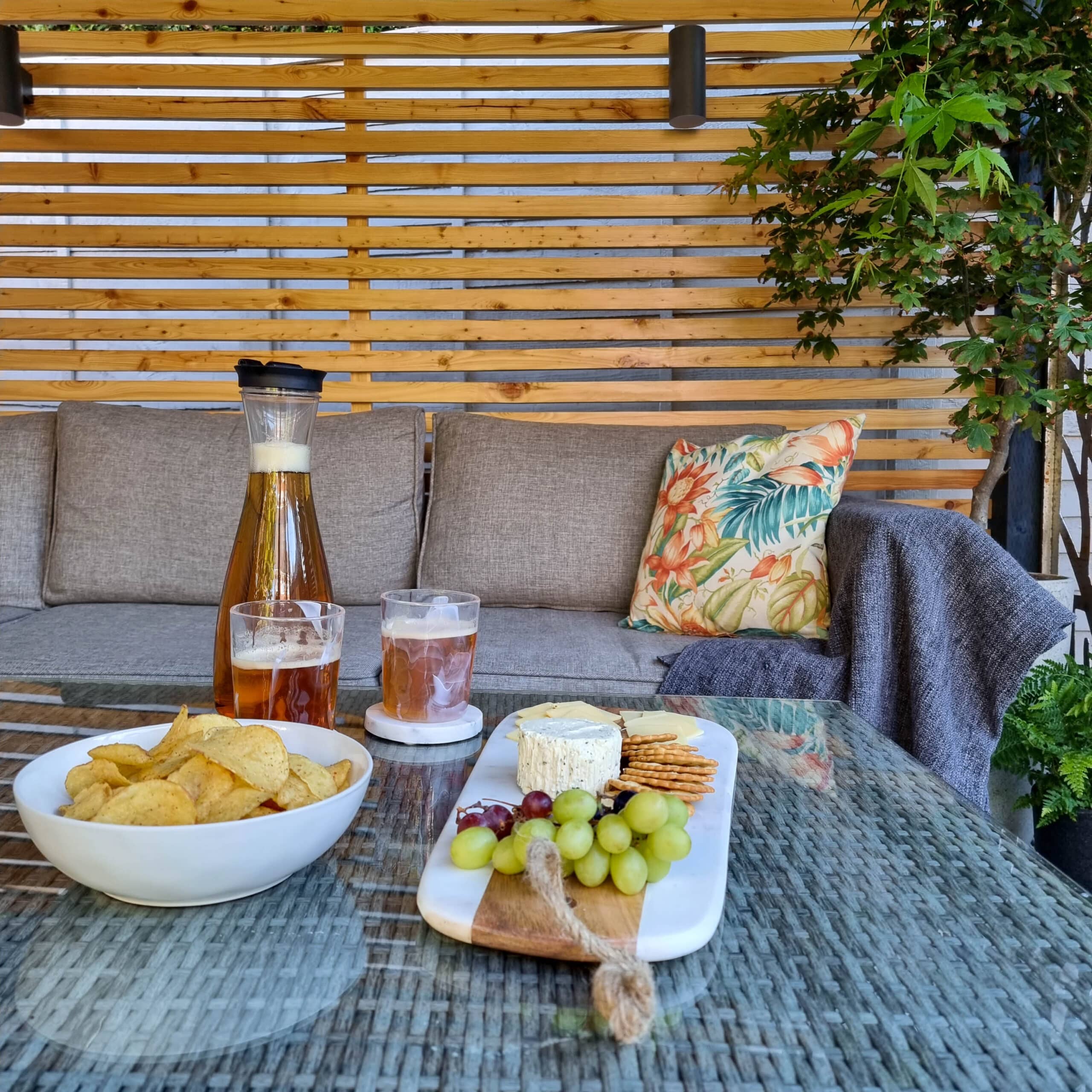
For the better part of a decade, the British garden underwent a grey-washing. Driven by the meteoric rise of Anthracite PVC windows and the minimalist “industrial chic” interior trend, our outdoor spaces followed suit. We installed slate-grey composite decks, charcoal porcelain tiles, and silver-grey fencing. It was clean, modern, and, as many homeowners are now discovering, somewhat sterile. This year, the tide has officially turned. The British homeowner wants their garden to look idyllic, not like a high-end car park. This shift toward “Biophilic” design (a concept that focuses on our innate attraction to nature and natural processes) is fundamentally changing the composite decking market.
The data supports this pivot. Industry reports from early 2026 indicate that sales of grey-toned composite boards have dipped by 22% year-on-year, while organic tones (spanning deep oaks, weathered walnuts, and soft taupes) now account for over 58% of all new installations in the UK. This is a reaction to our environment. The tactile warmth of a “nature-mimicking” board provides a psychological sanctuary in our increasingly digital and synthetic world. We are seeing a move away from the flat perfection of early-generation composites toward multi-tonal boards that embrace the “imperfections” of real timber, without the maintenance headache that traditionally came with it
The dominance of slate grey was rooted in a desire for a maintenance-free aesthetic that looked expensive. However, the British climate (notoriously overcast for much of the year) has a unique relationship with colour. In the height of a grey British winter, a grey deck can feel cold and uninviting, blending into the leaden sky rather than providing a focal point. This is where the psychological shift begins. Warm browns and taupes introduce a visual heat to the garden, making the space feel inhabited and cosy even on a damp Tuesday in November.
Consider the Kitchen-to-Garden flow that has become the hallmark of UK home improvement. As we’ve moved toward warmer interior palettes ( e.g. terracotta, sage green, and oatmeal), the jarring transition to a cold grey deck became a design hurdle. A taupe deck acts as a bridge between the interior comforts of a home and the raw greenery of the garden. According to environmental psychology studies, spaces that incorporate natural wood tones can lower cortisol levels and heart rates. For the UK homeowner, who often views their garden as a primary stress-relief zone, the move to biophilic tones is a move toward better mental well-being within the home footprint.
Authentic textures are replacing the “plastic” look
One of the primary drivers of the 2026 biophilic shift is the incredible advancement in grain technology. In the early 2020s, composite decking often looked like exactly what it was: a manufactured product. The grain patterns were repetitive, and the sheen of the plastic was often too high. Modern production has solved this. Today’s high-end boards utilise digital surface scanning of real heritage timbers to create a surface that is indistinguishable from the real thing until you touch it.
These boards now feature multi-chromatic technology, where three or four different pigment shades are swirled through the capping layer during the co-extrusion process. This prevents the sterile look of slate grey and ensures that each board has the natural variance found in a forest. When the sun hits a taupe or warm brown board, it reflects light in a diffuse, soft manner, whereas darker greys tend to absorb heat and reflect light harshly. This technical evolution has allowed homeowners to achieve the “Cotswold Stone” or “Rustic Barn” aesthetic that is so quintessentially British, while retaining the 25-year lifespan and slip-resistance that makes composite so attractive in our wet climate.
Thermal Performance and the Barefoot Factor
Beyond aesthetics, there is a very practical, technical reason why warm browns are ousting dark greys: thermal absorption. The UK has experienced record-breaking summer temperatures over the last few years, and many homeowners who installed dark charcoal or slate grey decks found them unusable during a heatwave. Dark grey composite boards can reach surface temperatures of over 60°C in direct sunlight, hot enough to cause discomfort for pets and children. This “Heat Island” effect in small urban gardens became a significant deterrent for dark palettes.
Light taupes and mid-toned browns have a significantly higher Solar Reflectance Index (SRI). On a 30°C day in London, a light taupe board can be up to 15°C cooler than a dark grey board. This practical necessity has shifted the market toward “Cool-Touch” pigments found in the newer biophilic ranges. Manufacturers are now prioritising these lighter, nature-mimicking shades because they offer a better user experience. Homeowners are realising that a deck is a functional floor and the comfort of walking barefoot across a warm oak-toned surface in July is far superior to the searing heat of a modern grey slab.
A tale of two terraces in the British garden context
To understand the shift, one only needs to look at the typical suburban renovation. For instance, a couple in St Albans, the Millers, who renovated their garden in 2019. They chose a sharp, slate-grey deck to match their new bi-fold doors. While it looked striking in the brochure, by 2024, they felt the garden lacked soul. The grey deck made their lavender and hydrangeas look washed out, and the space felt disconnected from the ancient oak tree at the bottom of their plot. It felt like an extension of their office rather than a sanctuary.
When their neighbours, the Taylors, did their garden in early this year, they opted for a “Weathered Teak” composite with deep graining and warm taupe undertones. The difference was immediate. The warm tones complemented the red-brick masonry of their Victorian home and made the green of the lawn pop with vibrancy. The Taylors’ garden felt lived-in, organic, and timeless. This regret of the grey-era is a common sentiment in UK DIY forums today. People are reclaiming the “English Country Garden” aesthetic, but they are doing it with 21st-century materials that won’t rot, warp, or require an annual appointment with a tin of wood stain.
The “Timeless” vs. “Trendy” Debate
From an investment perspective, the shift toward biophilic tones is a savvy move. Estate agents and property experts, such as those at Savills or Knight Frank, have noted that ultra-modern trends can date a property quickly. Just as the avocado bathroom defined a specific era, the slate-grey deck is increasingly seen as a marker of the early 2020s. In contrast, natural wood tones are considered “period-neutral.” Whether a property is a 17th-century cottage or a 2026 eco-home, a warm brown deck feels appropriate and integrated.
A 2025 study by the Landscape Institute suggested that gardens with high-quality naturalistic landscaping can add between 5% and 15% to a home’s value in the UK. As we look toward the latter half of the decade, the market is prioritising longevity. A taupe or oak-toned deck is seen as a forever choice. It doesn’t fight with the landscape; it enhances it. For homeowners looking to maximise their ROI, the move away from the industrial and toward the organic is not just a stylistic choice, a financial one.