
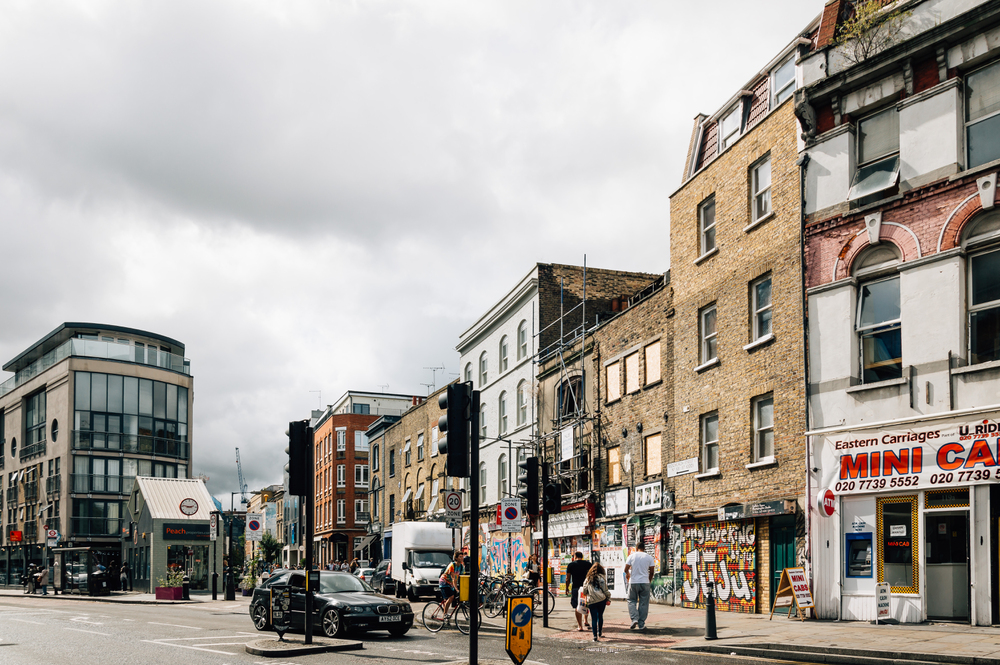
Look up as you walk the back streets around Bethnal Green and you’ll spot something unusual: rows of oversized attic windows, stretching almost the full width of the roofline. These belonged to Huguenot silk weavers who fled religious persecution in France in the 18th century and settled across this corner of East London, working their looms by the light those windows let in. It’s a small detail, but it sums up why so many renovators end up here rather than somewhere flatter and newer, and why estate agents in the area now field regular enquiries specifically about original features.
* Collaborative Post
Bethnal Green sits in the London Borough of Tower Hamlets, bordered by Shoreditch to the north, Bow to the east and Whitechapel to the south, with the City of London just two miles west. For a sense of how demand for that period housing stock is shaping the local market, Bethnal Green estate agents such as Wextons, who’ve traded in E2 for nearly 20 years, report steady interest from buyers actively seeking a renovation project rather than a finished flat.
If you’re weighing up a period property purchase here, whether as a first home or a project, here’s what the history, the market and the planning rules actually mean for you, and what to check before you commit to anything.
Key Takeaways
- Large attic windows on many Bethnal Green terraces are a visible legacy of the area’s 18th century silk weaving industry.
- The wider borough saw a sharp annual price fall this year, though the official statistics body flags local figures like this as volatile.
- Sold prices on Bethnal Green Road itself have held steadier, sitting a touch below the half-million mark over the past year.
- Two designated pockets of the neighbourhood carry conservation area status, meaning exterior renovation work there needs council sign-off first.
- Warehouse conversions sit alongside Georgian terraces and Victorian weavers’ cottages, giving buyers a genuinely wide choice of period character.
A Neighbourhood Built by Makers
Bethnal Green’s name comes from the Anglo-Saxon “Blithehale,” meaning happy corner, first recorded in the 13th century. It began as farmland supplying market produce to the City, before the 18th century brought waves of Huguenot silk weavers whose skill turned the area into a genuine manufacturing hub, one of the most important in the country at the time.
Many of the original weavers’ houses were lost to Second World War bombing and post-war redevelopment, particularly around Seabright Street, where Weavers’ Fields park now stands as a green memorial to the trade that once defined the area. Enough survive elsewhere, though, that spotting an original or carefully restored attic window is still one of the small pleasures of a walk around the back streets, particularly on the quieter residential roads away from the main junctions.
What You’re Buying: Property Types in Bethnal Green
The property mix here is genuinely varied. Georgian terraces on streets like Old Ford Road date back to around 1790, some of the oldest surviving housing stock in Tower Hamlets, and typically command a premium reflecting both their age and their rarity within the borough.
Victorian weavers’ cottages and later terraces make up much of the residential core, often compact but full of original character worth preserving, from decorative brickwork to the attic windows described above. Warehouse and factory conversions add a different flavour entirely, trading period joinery for exposed brick and steel, and they’ve become a genuine draw for buyers who want space and character without the upkeep of a Georgian roofline. Ex-council flats and newer developments round out the market at the more affordable end, useful for buyers prioritising budget over period charm.
The Numbers: Bethnal Green Property Prices in 2026
Tower Hamlets recorded an average house price of £457,000 in June 2026, according to the Office for National Statistics, down 13.1% on the year. That’s a steeper fall than London overall managed over the same period, though the ONS itself cautions that local authority figures like this are based on a smaller sample of transactions and can move sharply from month to month, so a single release shouldn’t be taken as the whole story.
Zooming in on Bethnal Green Road specifically gives a steadier picture. Sold prices there have averaged between £440,000 and £450,000 over the past 12 months, based on Land Registry data, broadly in line with the wider borough figure despite the recent volatility.
Rents have moved in the opposite direction. Average monthly rent across Tower Hamlets rose to £2,439 in July 2026, up 3.0% on the year, a similar pace to London as a whole. Across London, the average house price stood at £554,000 in June 2026, meaning Bethnal Green still offers a meaningful discount against the capital-wide figure, project or not.
Conservation Areas and What They Mean for Renovators
Not every street in Bethnal Green is equally free to alter. The Jesus Hospital Estate and Old Bethnal Green Road both carry conservation area status, which means permitted development rights are more restricted than in a typical residential street.
|
Worth checking: It’s worth confirming a property’s exact designation with the local council before you fall in love with a fixer-upper, since a conservation area listing can add real time and cost to a renovation plan even when it also protects the character that made the street desirable in the first place. |
In practice, that means work to a property’s exterior, including replacement windows, doors and roof alterations, will usually need planning permission rather than falling under the usual permitted development allowances. For anyone unsure where they stand, the government’s own planning permission guidance is a sensible starting point before speaking to the council directly.
Getting Period Details Right
For buyers taking on a genuine period project, the details tend to matter as much as the structural work. Original staircases are often the first thing worth assessing, since restoring worn treads, spindles and mouldings can preserve a huge amount of character without a full rebuild, and a specialist can usually save far more of the original fabric than an untrained eye would expect.
Windows deserve similar care. Sash windows are the default choice for Georgian and Victorian properties, and modern manufacturing means they can now be fitted with double glazing and proper draught-proofing without losing the period look that makes these streets so distinctive in the first place. For anything more ambitious, a Georgian terrace or a converted warehouse can benefit hugely from working with an architect who understands how to read an older building before reshaping it, rather than one who treats every constraint as an obstacle to design around.
Working with a Local Agent
Local knowledge earns its keep in a market with this much variation street to street. An agent working E2 daily will know which streets sit inside a conservation area, which warehouse conversions have already had their major works done, and how a Georgian terrace on Old Ford Road actually compares with a Victorian weaver’s cottage two streets over in terms of both price and the scale of work still needed.
Wextons has operated in Bethnal Green for close to two decades, covering everything from period conversions near Columbia Road to modern flats close to Cambridge Heath station, giving the team a genuinely broad view of how the local market moves and which projects tend to pay off.
Frequently Asked Questions
Why do some Bethnal Green houses have such large attic windows?
They’re a legacy of the area’s 18th century Huguenot silk weaving industry. The oversized windows let in maximum daylight for weavers working looms by hand.
Do I need planning permission to renovate a period property in Bethnal Green?
It depends on the street. Properties within the Jesus Hospital Estate or Old Bethnal Green Road conservation areas typically need planning permission for exterior changes that would otherwise be permitted development elsewhere.
Is Bethnal Green a good area for a renovation project?
Yes, with genuine variety: Georgian terraces, Victorian weavers’ cottages and warehouse conversions all sit within the same postcode, offering different levels of project at different price points.
How have Bethnal Green house prices moved recently?
Tower Hamlets recorded a 13.1% annual fall to £457,000 in June 2026, though Bethnal Green Road itself has held closer to £440,000 to £450,000, and the ONS notes local figures can be volatile.
What should I check before buying a period property here?
Confirm the property’s conservation area status with the council, get a proper survey given the age of the housing stock, and budget extra time and cost for any exterior works that need planning permission.
Is a warehouse conversion a good alternative to a period terrace?
It can be, particularly for those drawn to industrial-style interiors rather than original joinery and staircases, though service charges and lease terms are worth checking carefully.
Worth the Effort
Bethnal Green rewards buyers willing to look past a rough exterior. The same qualities that drew silk weavers here three centuries ago, a strong sense of community and buildings built for a purpose, still shape the area today, just with rather different asking prices attached. For anyone serious about a renovation project rather than a move-in-ready flat, it remains one of East London’s more interesting places to start looking, and one where the right local advice can make the difference between a rewarding project and a costly one. For a wider look at the process, our step-by-step guide to buying your first family home covers the budgeting and mortgage basics that apply whichever period property you end up choosing.
References
Office for National Statistics, Housing prices in Tower Hamlets, 2026 — https://www.ons.gov.uk/visualisations/housingpriceslocal/E09000030/
UK Government, Planning permission guidance, 2026 — https://www.gov.uk/planning-permission-england-wales
Historic England, Working from Home: England’s Domestic Textile Industry, 2024 — https://heritagecalling.com/2020/05/21/working-from-home-englands-domestic-textile-industry/
Wextons, Bethnal Green Estate & Letting Agents, 2026 — https://wextons.co.uk/estate-agents/bethnal-green/
Wextons, Guide to Bethnal Green’s Key Areas & Locations, 2026 — https://wextons.co.uk/local-area/best-streets-bethnal-green/
Fact Check: All statistics and data points in this article were verified against original sources as of 10 September 2026. Sources are listed in the References section.