
A laptop on the kitchen table works fine for a day. It doesn’t work for a career. If you’re logging real hours from home each week, the space around you either helps you focus or quietly works against you, and most people don’t realize which one is happening until their back starts complaining or their attention won’t hold past 10am.
* Collaborative Post
Here’s what actually goes into a home office that holds up long-term.
Pick a Spot You Can Defend
Before furniture, before décor, figure out where the office lives. A corner with a door, or even just a curtain or room divider, beats an open spot in a busy hallway every time. Interruptions and background noise don’t just annoy you in the moment — they chip away at focus for the rest of the day, and they make it harder to mentally clock out when work is done.
Natural light helps too, but angle your desk so the window is beside you, not behind your monitor. Otherwise you’re squinting at glare all afternoon.
The Desk Is Not Just a Surface
Whatever desk you already own might be doing you a disservice. You need enough room for a monitor, keyboard, and the odd stack of papers without everything crowding together, and the height needs to let your elbows sit near 90 degrees when you type.
If your budget allows for one upgrade, make it a height-adjustable desk. Standing for even part of the day changes how your afternoon feels, and it’s one of the few purchases that pays you back daily rather than sitting there looking nice.
Ergonomic Office Chairs Are Not Optional
This is the one item where cutting corners costs you later. A cheap chair might save £100 upfront, but stiff shoulders, a sore lower back, and afternoon fatigue aren’t free — they just bill you differently.
Ergonomic office chairs solve a specific problem: they keep your body supported through hours you’re not consciously thinking about your posture. When you’re shopping, don’t get distracted by looks. Check for:
-
Seat height you can adjust, so your feet rest flat and your knees sit around 90 degrees.
-
Lumbar support that actually matches the curve of your lower back, not a vague cushion.
-
Armrests that move, so your shoulders can relax instead of creeping up toward your ears.
-
Breathable material like mesh if you run warm during long stretches at the desk.
-
Adjustable seat depth, particularly if you’re on the shorter or taller end.
Give it a few weeks and the difference is obvious. Less shifting around, less reaching for painkillers by 4pm, more actual focus.
Don’t Forget Your Other Office Chairs
Your main chair isn’t the only seat doing work. If you take calls at a second desk, host anyone in your office, or have a reading corner in the same room, those office chairs matter too. A great ergonomic chair at your desk doesn’t cancel out an hour spent slouched in a wobbly stool somewhere else in the room.
You don’t need to spend the same amount on secondary seating, but don’t treat it as an afterthought either. Support and adjustability still apply.
Get the Screen and Keyboard Right
A great chair can’t fix a badly placed monitor. Keep the screen roughly an arm’s length away with the top edge at eye level. Working off a laptop all day? Add a stand and a separate keyboard and mouse, hunching over a small screen for hours is one of the fastest ways to end up with neck pain that has nothing to do with your chair.
Keep the keyboard close enough that your elbows stay near your body. Reaching forward all day adds strain your shoulders don’t need.
Deal With the Cable Mess
A snake pit of cables under the desk isn’t just an eyesore, visual clutter genuinely pulls at your attention, even when you’re not looking directly at it. A cable tray or a few clips sorts this out in ten minutes. Same goes for your desktop surface: keep only what you touch daily within reach, and box up the rest.
Make It Yours, But Don’t Overdo It
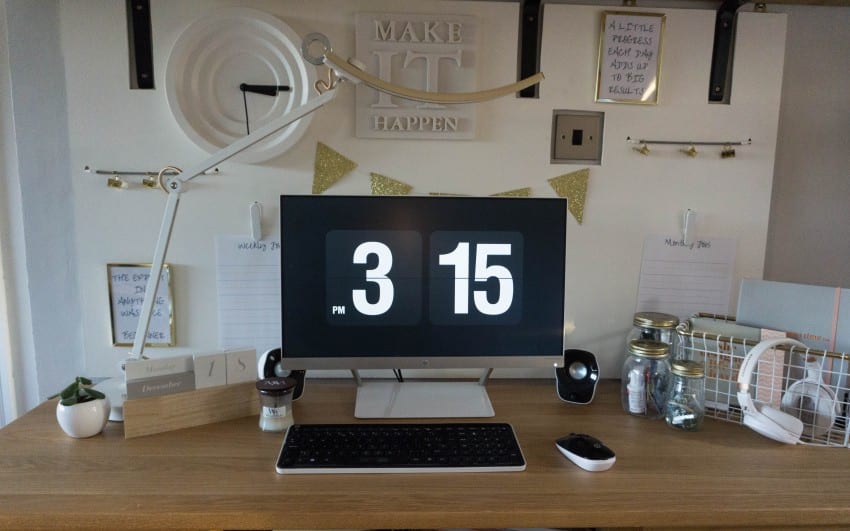
A plant, one piece of art, a coffee mug you actually like, small touches keep the space from feeling like a rented cubicle. Just watch the balance. A desk buried under trinkets creates its own kind of distraction, no different from noise leaking in from another room.
Plan for the Hours Without Sunlight
Daylight is great until it isn’t there anymore. A desk lamp with adjustable brightness keeps evening work sessions from straining your eyes, and warmer light later in the day makes it easier to feel like the workday is actually ending.
The Bottom Line
You don’t need a full renovation to get this right. Start with a desk that fits you, one of the many solid ergonomic office chairs on the market, and a layout that keeps distractions out. Everything else, lighting, cables, the little personal touches, you can build in over time. The goal isn’t a perfect-looking office. It’s one you can sit in for eight hours and still feel fine at the end of it.