
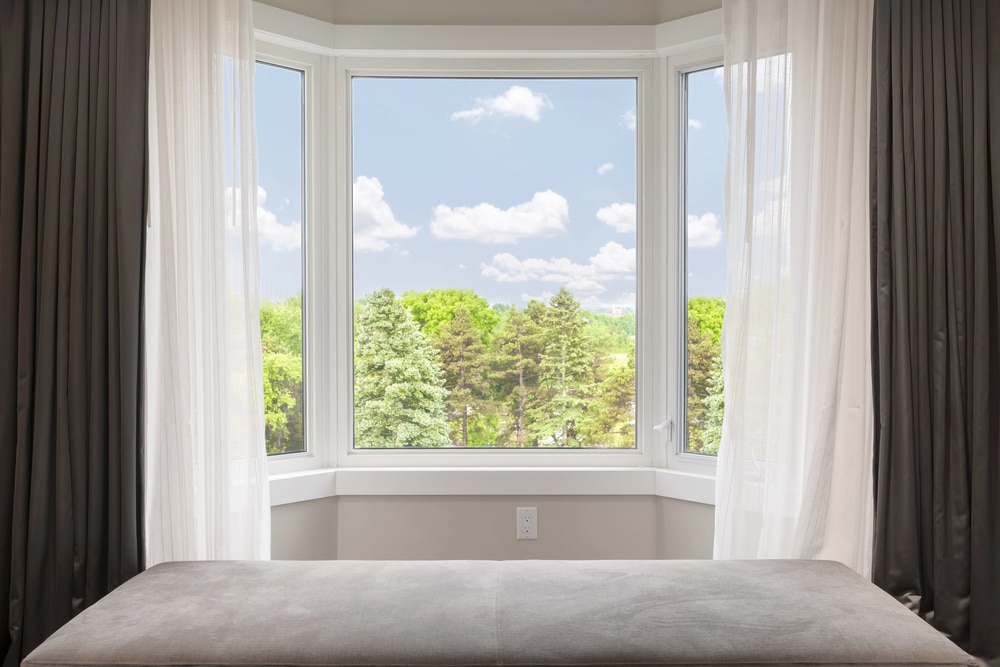
If you’ve got a bay window, you already know it’s one of the best features in the house. The extra light, the sense of space, the character it adds to a room. But the moment you try to hang something on it, all that charm turns into a headache. Standard curtain poles don’t fit. Off-the-shelf blinds leave gaps. And the quotes you get can make your eyes water.
Hull is full of Victorian and Edwardian terraces with beautiful bay windows, and most of them come with the same problem: nothing off the rack will work properly. Let’s go through the main options and what actually suits each type of bay.
Curtain Panels on Separate Poles
This is the budget-friendly route. You treat each flat section of the bay as its own window and hang a curtain panel on a separate pole or track. It works best on angled bays, the classic three-sided kind you’ll see all over Hull’s terraces, where each section sits at a clear angle from the next.
You can use standard poles, which keeps the cost down. But you’ll notice the joins. Where poles meet in the corners, there’ll be gaps and bunching that never quite looks right, especially once the curtains are closed. If money’s tight, it’ll get the job done. Just don’t expect a clean, finished look.
A Curved or Bay Track With One Pair of Curtains
If you want something that actually looks polished, a continuous bay track is the way to go. The track bends to follow the shape of your bay, and one pair of curtains glides from end to end. No gaps, no bunching, no awkward corners to deal with.
This is where custom made curtains really come into their own, because both the track and the fabric need to be measured precisely for your specific bay. Every bay is slightly different, even in houses on the same street, so getting the measurements spot on matters more than anything else.
If you’re collecting quotes, measure the width of each section individually and jot down the angles where they meet. A good fitter will want to come and measure in person, but having your own numbers will help you compare what you’re being quoted.
Roman Blinds for Each Section
Roman blinds are a popular pick, especially in kitchens or bedrooms where curtains would get in the way of furniture or radiators. Each section of the bay gets its own blind, fitted inside the recess. They look tidy, they’re easy to use, and they give you decent control over how much light comes in.
The catch is cost. Three or four individual made-to-measure blinds adds up fast, and the fabric needs to match perfectly across all of them. If one blind fades quicker than the others because it catches more sun, you’ll notice it straight away.
Shutters: The Premium Option
Plantation shutters look brilliant on bays and they’ll work with almost any shape, whether it’s angled or curved. They fold back flat during the day, let you control light without blocking it completely, and they’ll last for decades with very little maintenance.
The trade-off is usually the price. Shutters are comfortably the most expensive option on this list, and lead times can stretch to several weeks.
Get Your Measurements Right First
Whichever route you go, getting your measurements right will save you time and money. Measure each section of the bay separately, from wall to wall and from the top of the frame down to the sill. Note whether the bay is angled or curved, and if you’re thinking about blinds, measure the depth of the recess too.
Take photos from different angles as well, because when you’re comparing quotes over the phone, a picture will save you ten minutes of back-and-forth explanation.
Meta Description: Struggling to dress your bay window? Discover the pros and cons of separate poles, continuous tracks, Roman blinds, and shutters to find the perfect fit.
How to Dress Bay Windows (Without Losing Your Mind)
If you’ve got a bay window, you already know it’s one of the best features in the house. The extra light, the sense of space, the character it adds to a room. But the moment you try to hang something on it, all that charm turns into a headache. Standard curtain poles don’t fit. Off-the-shelf blinds leave gaps. And the quotes you get can make your eyes water.
Hull is full of Victorian and Edwardian terraces with beautiful bay windows, and most of them come with the same problem: nothing off the rack will work properly. Let’s go through the main options and what actually suits each type of bay.
Curtain Panels on Separate Poles
This is the budget-friendly route. You treat each flat section of the bay as its own window and hang a curtain panel on a separate pole or track. It works best on angled bays, the classic three-sided kind you’ll see all over Hull’s terraces, where each section sits at a clear angle from the next.
You can use standard poles, which keeps the cost down. But you’ll notice the joins. Where poles meet in the corners, there’ll be gaps and bunching that never quite looks right, especially once the curtains are closed. If money’s tight, it’ll get the job done. Just don’t expect a clean, finished look.
A Curved or Bay Track With One Pair of Curtains
If you want something that actually looks polished, a continuous bay track is the way to go. The track bends to follow the shape of your bay, and one pair of curtains glides from end to end. No gaps, no bunching, no awkward corners to deal with.
This is where custom made curtains really come into their own, because both the track and the fabric need to be measured precisely for your specific bay. Every bay is slightly different, even in houses on the same street, so getting the measurements spot on matters more than anything else.
If you’re collecting quotes, measure the width of each section individually and jot down the angles where they meet. A good fitter will want to come and measure in person, but having your own numbers will help you compare what you’re being quoted.
Roman Blinds for Each Section
Roman blinds are a popular pick, especially in kitchens or bedrooms where curtains would get in the way of furniture or radiators. Each section of the bay gets its own blind, fitted inside the recess. They look tidy, they’re easy to use, and they give you decent control over how much light comes in.
The catch is cost. Three or four individual made-to-measure blinds adds up fast, and the fabric needs to match perfectly across all of them. If one blind fades quicker than the others because it catches more sun, you’ll notice it straight away.
Shutters: The Premium Option
Plantation shutters look brilliant on bays and they’ll work with almost any shape, whether it’s angled or curved. They fold back flat during the day, let you control light without blocking it completely, and they’ll last for decades with very little maintenance.
The trade-off is usually the price. Shutters are comfortably the most expensive option on this list, and lead times can stretch to several weeks.
Get Your Measurements Right First
Whichever route you go, getting your measurements right will save you time and money. Measure each section of the bay separately, from wall to wall and from the top of the frame down to the sill. Note whether the bay is angled or curved, and if you’re thinking about blinds, measure the depth of the recess too.
Take photos from different angles as well, because when you’re comparing quotes over the phone, a picture will save you ten minutes of back-and-forth explanation.