
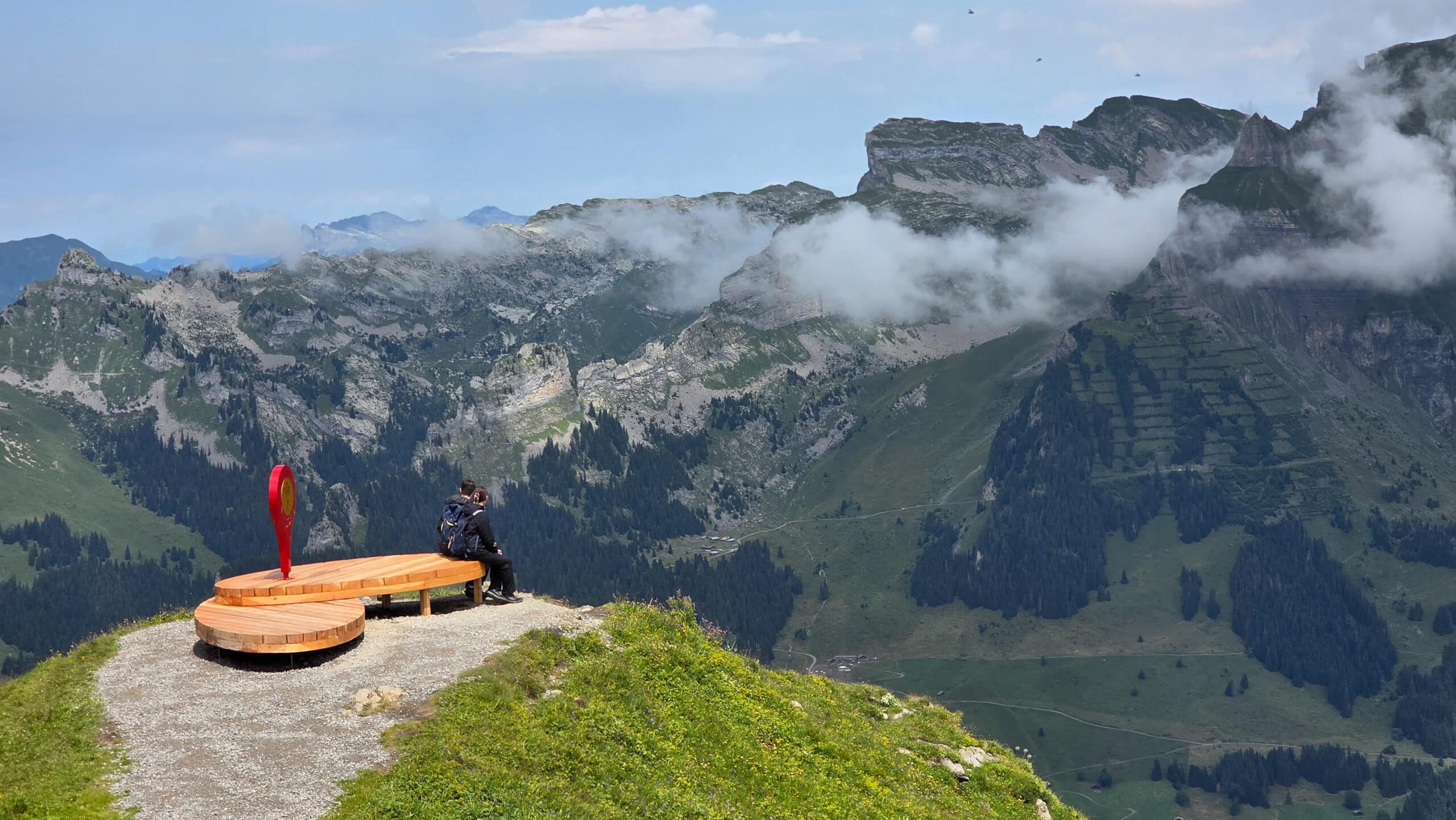
More people are picking destinations based on how a place makes them feel — not what it looks like in photos. Wellness travel keeps growing, and so does the research behind it. This piece breaks down what actually happens in the brain when surroundings change: light, sound, space, broken routines, and why certain environments shift mood faster than any supplement or sleep hack.
Why Your Surroundings Affect Mental State More Than Expected
Landing somewhere new feels different. Not just exciting — genuinely different. Clearer, sometimes. Less reactive. The simplest explanation: familiar environments trigger familiar thought loops. Change the inputs, and the brain shifts mode.
Environmental psychologists Rachel and Stephen Kaplan spent decades on this. Their attention restoration theory draws a line between directed attention — effortful, depleting — and involuntary attention, which restores it. Cities keep the brain locked in directed mode almost permanently. Natural settings pull it out.
Bali is a useful example. Travelers staying in 3 bedroom villas in Bali through TheYoungVillas consistently describe the same first 48 hours: slower, quieter, with the odd sensation of having more time than usual. That’s not a marketing effect. That’s the Kaplans’ theory in practice.
Light Does More Than Wake You Up
Bali sits 8 degrees south of the equator. The light is different — diffuse in the morning, hard at midday, genuinely golden in late afternoon in a way that doesn’t happen at higher latitudes. This has a physiological effect, not just a photographic one.
Morning sunlight regulates melatonin and serotonin production and resets the circadian rhythm within days. People who travel from northern European winters to tropical environments and report feeling less depressed within a week often attribute it to finally relaxing. A significant part of it is photobiology.
Sensory Input: What the Nervous System Does With New Environments
Sound
Urban soundscapes keep the nervous system in low-grade alert. Traffic, construction, notification sounds — none loud enough to be consciously disturbing, all constant enough to prevent full downregulation. The body stays slightly braced.
Natural soundscapes do the opposite. Moving water, wind, insects at dusk — these have been directly linked to reduced sympathetic nervous system activity. High-end wellness retreats are almost always near water or in forests for exactly this reason.
Smell and Memory
Smell bypasses the thalamus entirely and connects straight to the limbic system — the part handling emotion and memory. This is why certain places feel emotionally loaded within minutes of arrival. Frangipani, incense, salt air — these trigger state shifts faster than conscious relaxation techniques.
It also explains why returning somewhere meaningful feels more intense than the first visit. The olfactory memory is already there, waiting.
What Breaking Routine Actually Does
Travel isn’t just rest. The psychological mechanism is more specific than that.
Habitual behavior loops break when environments change. The same coffee shop, the same route, the same lunch — none of it is available. Every small decision becomes slightly new. This forces conscious engagement with surroundings rather than automated response, which interrupts rumination patterns. Hard to spiral about work when navigating a rice terrace path in Tegallalang.
What tends to happen across a typical week abroad:
- Days 1–2: Mild disorientation, heightened sensory awareness, some restlessness for habitual overthinkers
- Days 3–5: Disruption starts feeling freeing; sleep usually improves
- Days 6–10: Cognitive flexibility increases; less emotional reactivity, more creative thinking
- Day 10+: Some travelers hit a second dip — novelty normalizes, underlying patterns resurface
That last point matters. Travel creates conditions that make certain psychological work easier. It doesn’t do the work.
Architecture and Space: Why Certain Rooms Feel Different
What Makes a Space Restorative
Environmental psychology has a fairly consistent profile for spaces that restore rather than deplete: semi-enclosed, with an outward view, access to natural elements, and a sense of prospect — you can see what’s approaching without feeling exposed. Evolutionary logic suggests this is hardwired.
Spaces that tend to match:
- Terraces overlooking water or greenery
- High-ceilinged rooms with open doors to outside
- Shaded outdoor areas with airflow
- Interiors using wood, stone, linen rather than synthetic surfaces
Open-plan villa architecture in Bali — where indoor and outdoor space blurs — maps almost directly onto this profile.
Scale
Scale affects mood in measurable ways. A standard 18-square-meter hotel room keeps the nervous system subtly compressed. Large, open, high-ceilinged spaces that are warm and furnished — not cold and institutional — produce calm alertness. Neither agitation nor lethargy. Just steadiness.
The Social Layer
Travel changes social inputs alongside physical ones. People around you have also chosen to be there, carry fewer daily obligations, and are — on average — operating closer to their baseline calm. Emotional contagion is well-documented. The nervous system co-regulates with others nearby. A calmer crowd produces a calmer state.
Solo and group travel produce different outcomes for this reason, not just preference. Solo travel removes friction and increases self-directed attention. Group travel amplifies emotional states — in both directions.
Applying This Without Booking a Flight
Some of what environmental psychology identifies translates directly to daily life:
- Morning light in the first two hours of the day — sitting near a window makes a measurable difference
- 20 minutes in a natural setting daily — not as exercise, just exposure
- Reducing synthetic soundscapes — white noise doesn’t replicate natural sound, but it limits urban noise damage
- Prioritizing space and natural materials when traveling — the mood payoff on accommodation with outdoor access tends to justify the cost
The Psychology of Where We Choose to Be
The link between environment and mood isn’t metaphorical — it’s physiological, measurable, reasonably well understood. What travel provides, at its best, is access to environments daily life doesn’t. Better light, less noise, more space, different sensory inputs, disrupted habits.
Whether that happens in Bali, a cabin in Slovenia, or a well-designed apartment in Lisbon matters less than whether the environment actually delivers what the research identifies as restorative. The destination varies. The mechanism stays the same.
Most people don’t pay attention to how spaces affect them. The ones who do tend to make better choices and feel the difference.