
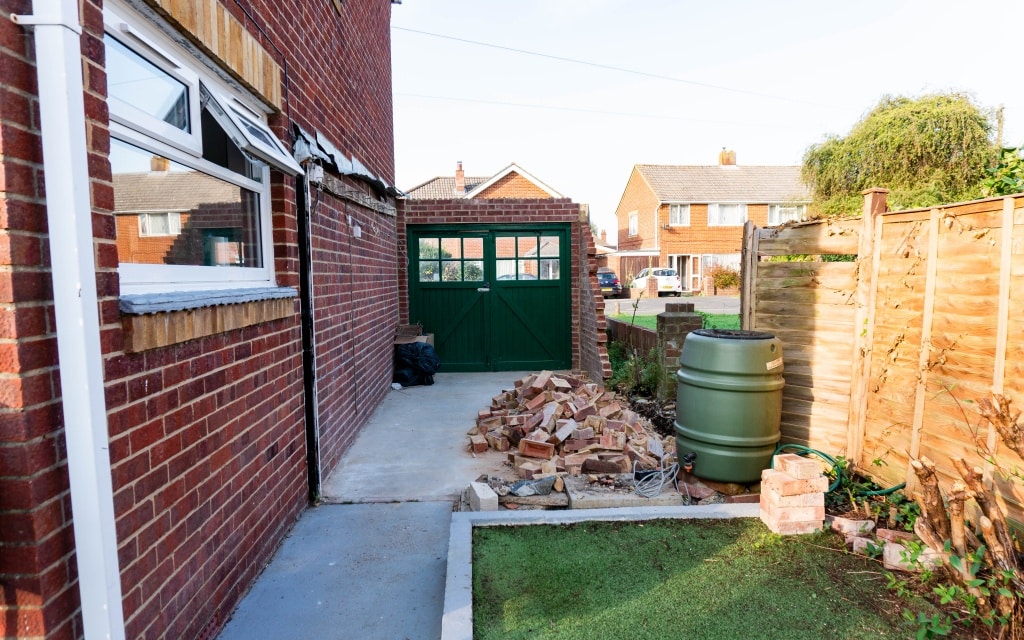
Renovating a home as a family can be an exciting journey. Among other things, you will have to compare quotes from contractors, coordinate the workers, make sure everything you do is compliant with applicable laws, apply for the right permits, and last but not least, properly dispose of all the construction waste.
*Collaborative Post
However, managing waste disposal alone is not practical; it is a massive headache. It is standard practice for contractors, companies, and private individuals to hire specialised companies to handle debris removal. For homeowners, the usual go-to option is skip hire companies because most of them not only provide the skip itself, but also the service of waste disposal
While this solves the headache of how to get rid of the waste, it immediately introduces a new dilemma: choosing the right type, and hiring the right skip size. Order one that is too small, and you will end up paying for a second collection; order one that is too big, and you are paying for space. So, what sizes are available, and how do you choose the perfect one for your project?
1. Understand the Scope of Your Project
Before you book anything, it is important to understand the scope of your project. Are you simply doing a seasonal spring clean, tackling minor household refurbishments, or planning out major renovation work? Selecting your ideal skip size depends on the specific type of job you have planned.
For instance, a simple bathroom refurbishment will produce completely different debris compared to major garden clearance projects. Take a moment to sit down and consider the amount of waste you expect to generate.
As a general rule, you should always choose a bin capacity larger than you think is necessary. If you over-estimate the skip size you need, it will ultimately work out cheaper than needing to book a replacement skip later on. A container that is too small guarantees you will end up with unwanted waste left over, while one that is too large means your site clearance will cost you more than necessary.
2. Skip Sizes and Capacities
In the UK, containers are measured by the internal volume of waste held in cubic yards. One cubic yard takes up the same physical space as ten standard black bin bags. The most common options for residential waste disposal are the following:
- The Mini Skip: A 2-yard container is the smallest and cheapest option available for hire. It is compact and perfect for small domestic jobs or minor DIY works, comfortably holding approximately 20 to 30 bin bags.
- The Midi Skip: The 4-yard skips are a popular choice for families for small projects. They offer sufficient space for bathroom or kitchen refurbishments and can safely hold the rough equivalent of 40 bin bags of waste.
- The Small Builders Skip: A 6-yard container is a standard size designed to handle heavy objects. It is the largest container that can be filled with heavy waste, like dense soil or rubble, accommodating around 50 to 60 bin bags comfortably.
- The Builders Skip: The 8-yard skips are the most popular in the UK due to their practical versatility. They offer ample space for bulky waste and hold up to 80 bin bags. However, remember that very heavy waste, such as thick dense rubble or soil, might make this bin too heavy to be safely collected.
Larger container options, such as 10-yard skips and 12-yard skips, are typically much better suited for light items and bulky waste, like old furniture or large packaging, rather than full loads of soil.
3. Placement and Local Permit Restrictions
Choosing the perfect container also depends on the physical location where the skip will be placed. If your property has enough room, keeping it on a residential driveway is often the easiest option. However, verify that your driveway is suitable for heavy loads, as the delivery could potentially cause damage to freshly laid tarmac when dropping the bin off.
If you do not have space on your property, it may be possible to put it on the road. Keep in mind that a road permit will be required for this, subject to the skip permit rules and restrictions set out by your specific local council. Usually, 8-yard skips are the largest container size that can legally be placed on public highways, but this rule can vary in different areas. Always check with your provider first, as local councils will rarely deal with the general public directly.
4. Loading Your Household Waste Properly
Once the container is delivered, filling it correctly is crucial to get better value for money. Maximise the capacity of your skip by putting large, bulky items in first. Break apart any large items so they can be placed flat into the skip, and then fill in any remaining gaps using your smaller waste.
It is crucial to remember that all hired skips, regardless of their size, must maintain a level load. This means that the waste materials must never be placed higher than the physical tallest sides of the skip. Overloading it is dangerous, and you will incur a wasted journey charge because the lorry will not be able to securely and safely collect it. Also, check the waste restrictions with your provider, as some items are strictly prohibited.
5. Protecting Your Hired Container
When undertaking household and garden clearances, protecting your hired bin from neighbours is something to consider. Rear-end loading skips, or RELs, alongside lidded skips are very similar to regular open skips but feature an added layer of top security.
Enclosed lidded skips can be a brilliant option for everyday residential skip hire when they are being temporarily placed on busy public highways. After initially paying for a container, the very last thing you want is for random other people to throw their household rubbish away inside your rented skip. A lockable lid keeps your waste in and prevents unauthorised access.
6. Environmental Responsibility
Modern waste management is deeply focused on environmentally friendly disposal methods. When your DIY renovation is complete, the friendly customer service team will arrange the final collection.
It is vital to ensure no prohibited items are hidden inside, as this disrupts the recycling policy of the sorting facility. Materials like wood, scrap metal, heavy plasterboard, mixed plastics, broken glass, cardboard, and waste paper are carefully separated as dry recyclables. This modern commitment ensures that fewer vehicle collections heavily minimise overall transport costs and significantly lower harmful greenhouse gas emissions.