
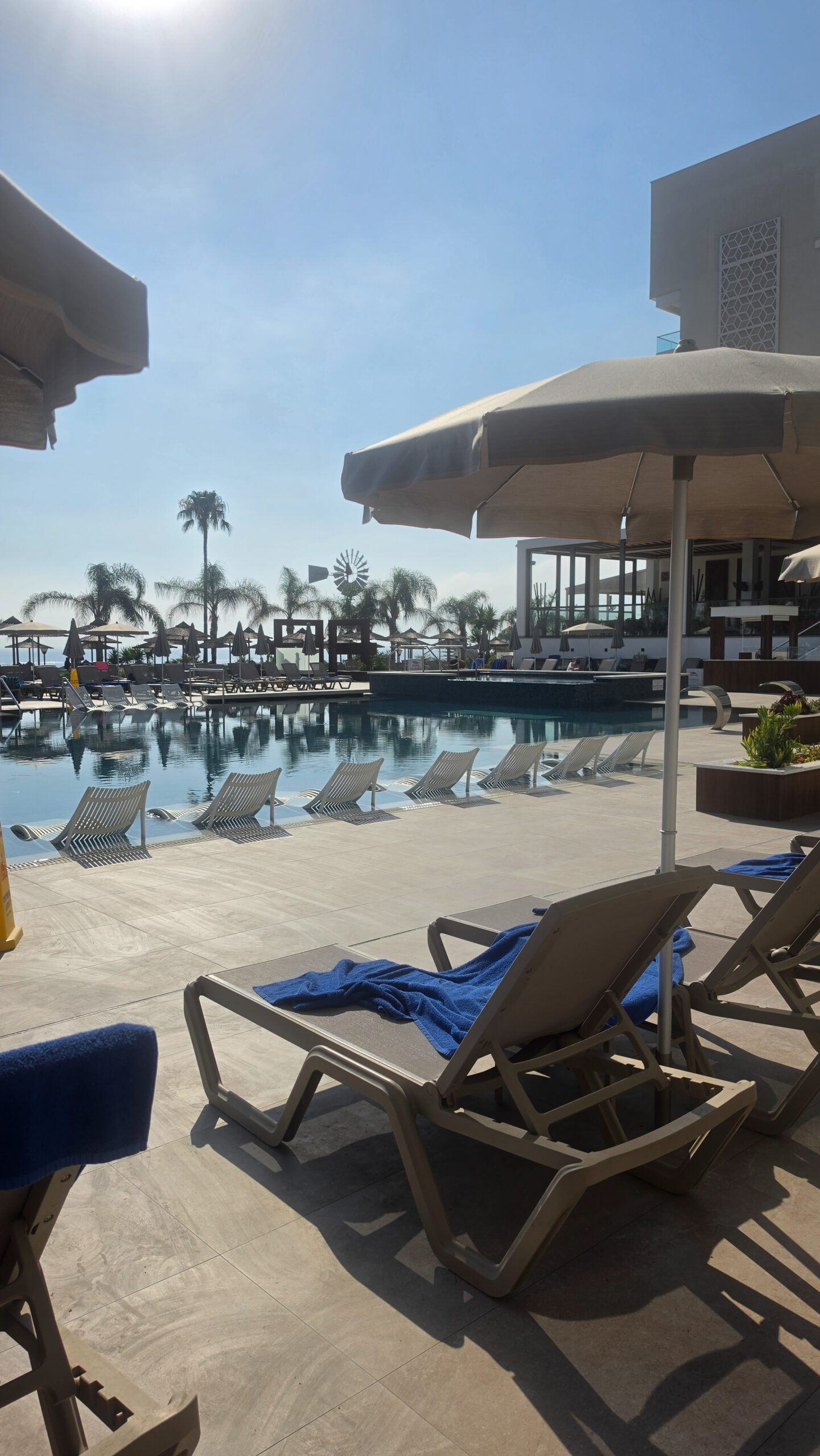
A family hotel can look perfect online and still be hard work once you arrive. A glossy pool photograph will not tell you whether the room goes dark at bedtime or the walk to the beach involves a steep hill and three busy roads. Ten focused minutes spent checking practical details can reveal far more than a star rating – and prevent a week of small frustrations.
* Collaborative Post
Minutes 1-3: inspect the room and the arrival
Start with the exact room category, not the hotel’s main gallery. Look for a floor plan, room dimensions and a written explanation of every bed. “Sleeps four” might mean a double bed plus a sofa bed that uses most of the living space once opened. Check whether the children’s sleeping area is actually separate, whether connecting rooms are guaranteed rather than merely requested and whether a cot leaves a clear route to the bathroom.
The UK government’s updated foreign travel checklist specifically advises checking basic accommodation safety, including fire arrangements and whether windows and balconies can be secured to prevent falls. So, if there is a balcony, inspect the photographs for climbable furniture and ask whether the door and windows can be secured.
Then trace the arrival from airport to room: transfer duration, possible coach stops, check-in time and reception hours. Families considering last-minute holidays can still complete these checks quickly; the key is to assess the hotel you can actually book, rather than lose an evening comparing dozens. My guide to choosing a holiday abroad with children is a useful reminder that room layout and transfer time deserve as much attention as the destination.
Minutes 4-5: find out how food will really work
Next, ignore phrases such as “family-friendly dining” until you know what they mean. Open the hotel’s official information and check breakfast and dinner times, whether children can eat earlier, what happens after a late arrival and whether drinks or snacks are available between meals. A buffet may provide choice, yes, but the useful question is whether there are simple foods your family will eat alongside the local dishes you would like to try. If the room is self-catering or has a kitchenette, confirm what is actually supplied: a fridge, hob, microwave and kettle are not interchangeable. Even a small fridge can make mornings easier.
For babies, check whether cots and highchairs require advance booking and whether bottle-warming or sterilising facilities are available. I’ve got a practical guide to planning a first holiday with a baby that puts feeding, sleep and transfer logistics ahead of style. The same principle works for every age: judge the hotel by how it handles your family’s hardest hour, whether that is breakfast before everyone is fully awake or dinner after a long day out.
Minutes 6-7: read the pool area like a parent
Pool photographs are designed to show blue water, not supervision challenges. So really zoom in on the layout. Is the children’s pool beside the main pool or hidden around a corner? Are there gates, clear depth markings and enough shade near the water, or only over distant loungers? Could one adult see children using different parts of the pool area?
Check the hotel’s official description for lifeguard hours instead of assuming that a visible chair means somebody is always on duty. The Royal Life Saving Society UK’s holiday water-safety guidance recommends keeping children within arm’s reach in and near water, even at lifeguarded pools and beaches. It also advises securing doors that lead to private pool areas. That makes the physical design important: a beautiful pool can be a poor family fit if supervision requires constant circling or there is nowhere shaded to settle with a younger child. Look for current official images, pool rules and opening times, then decide how supervision will work before the first swim.
Inflatables, slides and splash features are bonuses; an arrangement you can supervise confidently is essential.
Minutes 8-10: walk the neighbourhood online
Finish by leaving the hotel – well, digitally, at least. Use the hotel map, satellite view and street-level imagery to trace the route to the beach, nearest supermarket, pharmacy, playground and public transport stop. Distance alone can be misleading: 500 metres along a level promenade is very different from 500 metres uphill, without pavements or across a fast road. Check kerbs, steps, crossings and the surface if you will use a buggy. Find out whether the “nearby beach” is sandy, pebbly or reached by a steep flight of steps. Save the nearest medical centre and local emergency number before travelling, but also note everyday essentials.
And finally, look at what surrounds the hotel after dark. A central location can be wonderfully convenient, but rooms above entertainment areas or facing a late-night square may not suit light sleepers.
A ten-minute hotel check is really a test of ordinary family life. But if those basics above work, the polished photographs become a welcome extra rather than a distraction – and the hotel has a much better chance of feeling like a holiday for us adults, too.